


What Losing My Dad and a Pandemic Taught Me About Surrendering
- shgallis
- Feb 19, 2025
- 4 min read

I used to think that if I planned everything just right, life would go the way I wanted. If I studied hard, I’d get the grades. If I showed up for people, they’d always show up for me. If I followed the steps, things would work out. But nothing forces you to rethink control quite like loss.
At the start of 2020, I was a junior in high school, focused on what felt like normal teenage things—grades, friends, maybe even prom dresses I’d never get to wear. Then, in January, my dad passed away. It wasn’t necessarily sudden, but that didn’t make it any easier. He had spent over a month in the hospital when I was in middle school, waiting for a heart transplant that we knew was his only chance. When he finally got it, we thought that was the turning point—that things would get better. But complications from the surgery and the drastic change in his lifestyle slowly took a toll. By the time we lost him, it felt like we had been bracing for impact for years.
My dad wasn’t just “someone’s dad.” He had a dry, quick wit that could make anyone laugh, and even though he wasn’t the loudest person in the room, you always knew when he was there. He was sharp, observant, and incredibly stubborn in a way that made you both frustrated and secretly admire him. He loved working on projects—fixing things, figuring out how they worked, making them work even when they didn’t want to. He was the best teacher, an even better chef, and when he cared about something, he really cared. That included his family, even if he wasn’t always the best at showing it in the traditional ways. His love was in the small things, the practical things. Like making sure the car was always running right or giving advice in his classic no-nonsense way—short, to the point, but somehow exactly what I needed to hear.

In so many ways, I am just like him. Stubborn, blunt, always pushing forward. But also overly caring and somehow sensitive, even with a hard exterior. For a long time, that similarity scared me—what if I made the same mistakes? What if I carried the same weight he did? But now, I see it as a comfort. A reminder that he’s still with me, in the way I think, the way I react, the way I care. It doesn’t make the loss easier, but it gives me peace knowing that I will always be a reflection of him in some way.
Losing him felt like losing a sense of gravity. And just two months later, the world shut down. What was supposed to be “a week off from school” turned into the rest of my junior year—and then my entire senior year—on Zoom. No prom, no sports, no senior nights. Nothing. It was like life as I knew it just stopped.
At first, I tried to push through, to control what I could. I kept up with schoolwork, stayed busy, and told myself that once things settled down, I’d figure out how to really deal with everything. But the thing about loss—whether it’s a person, a sense of normalcy, or the life you thought you’d have—is that you can’t schedule your way out of it. You can’t plan grief away.
After the initial shock of the pandemic wore off, I started to realize how different everything felt—not just because of what I had lost, but because of how I had lost it. The pandemic was a collective grief, but losing my dad in the months right before made it feel deeply personal. It was like the whole world had entered a period of mourning right alongside me, but in a way that was isolating instead of comforting. People were grieving the loss of “normal,” and I was grieving the loss of him. And because everything was shut down, there was no distraction, no escape. Just me, alone with my thoughts, trying to make sense of a reality that no longer included my dad.
Life after loss is strange. No one tells you how much of grief is about the after—the way it reshapes you, how it sneaks up on you in moments you don’t expect. It’s not just the big things, like birthdays or holidays. It’s the small, stupid things. Seeing a car that looks like his and feeling that split second of recognition before remembering. Wanting to text him about needing a few bucks and realizing I can’t.
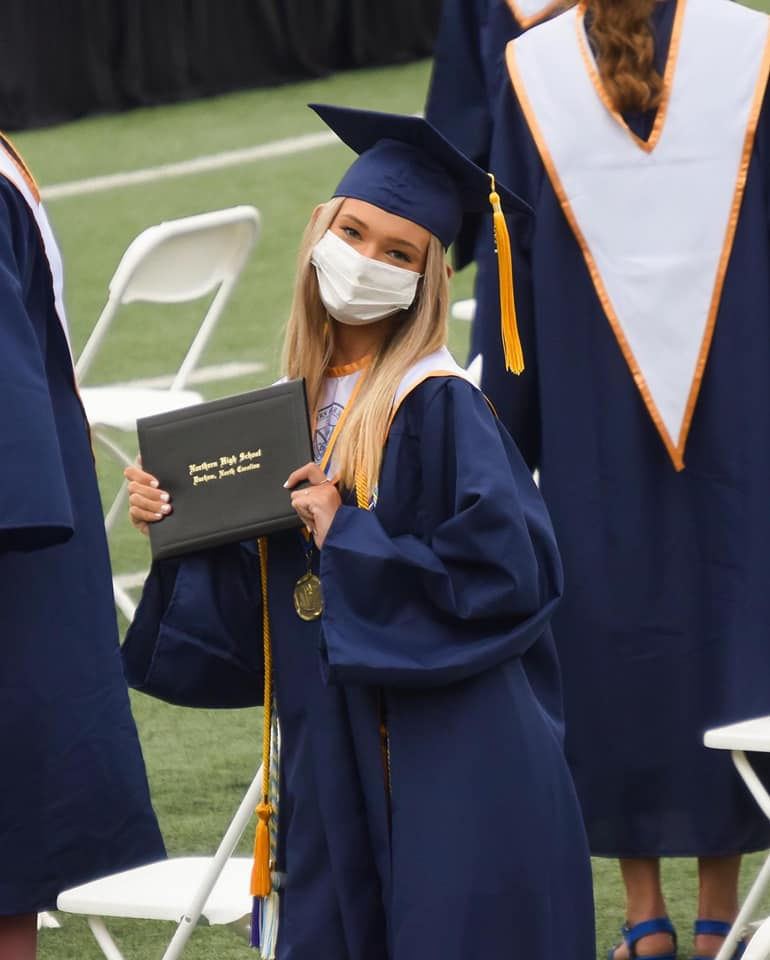
Walking across the stage at high school graduation, knowing he should have been there. Getting accepted into UNC-Chapel Hill, his favorite place on earth, and wishing I could tell him first. Thinking about the future—about getting married, walking down the aisle, about the family I’ll have one day that will only know him through stories. Even just walking down Franklin Street, past the building that once held his beloved restaurant, Cypress on the Hill, realizing that I’m living a life he isn’t in.


I overthink a lot. I analyze situations, replay conversations, and imagine scenarios where I could have done something differently. And this hasn't changed (for the better) since losing my dad or living through a pandemic. But I’ve learned (the hard way) that sometimes, the best thing you can do is take a deep breath and let go of the need to fix everything. Some things aren’t meant to be solved. They’re meant to be felt, processed, and eventually, carried forward in a way that doesn’t weigh you down.
I see the world differently now. I pay attention to the details in people—the way they show love in small ways, the way they don’t always say what they mean, the way grief lingers in people’s eyes even when they don’t talk about it. I’ve learned that people carry more than they let on, and that kindness, even in its simplest form, matters more than we realize.
I’m still figuring it all out, and I probably always will be. But if there’s one thing I know now that I didn’t before, it’s that surrendering isn’t the same as being powerless. It’s about trusting that even when things don’t go the way you planned, you’ll still find your way through.


Comments